> For the complete documentation index, see [llms.txt](https://ontime.gitbook.io/v2/llms.txt). Markdown versions of documentation pages are available by appending `.md` to page URLs; this page is available as [Markdown](https://ontime.gitbook.io/v2/features/external-data.md).
# External data
Inject external data to the Ontime presenter view
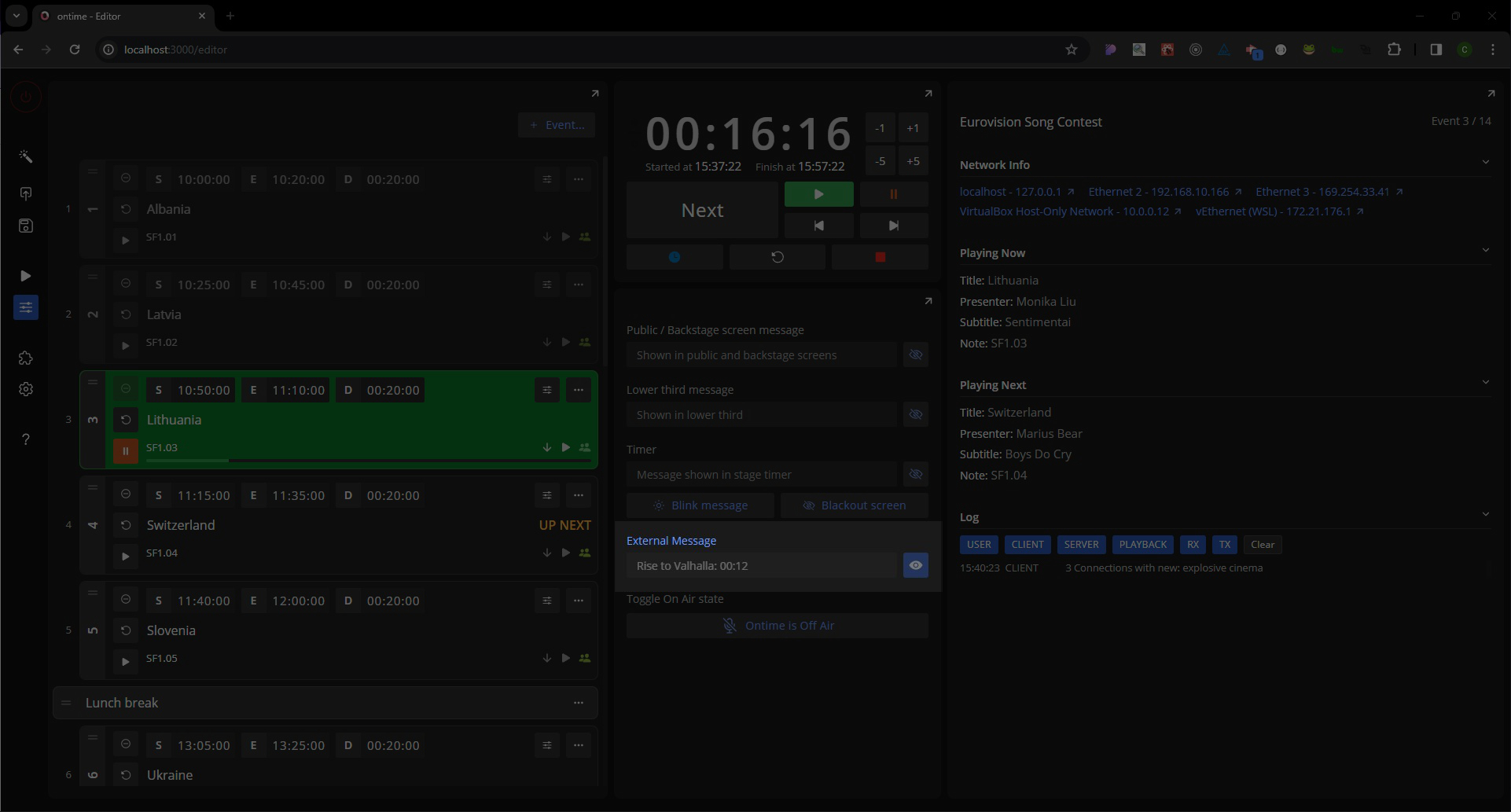
In the editor, we getfeedback on the external data
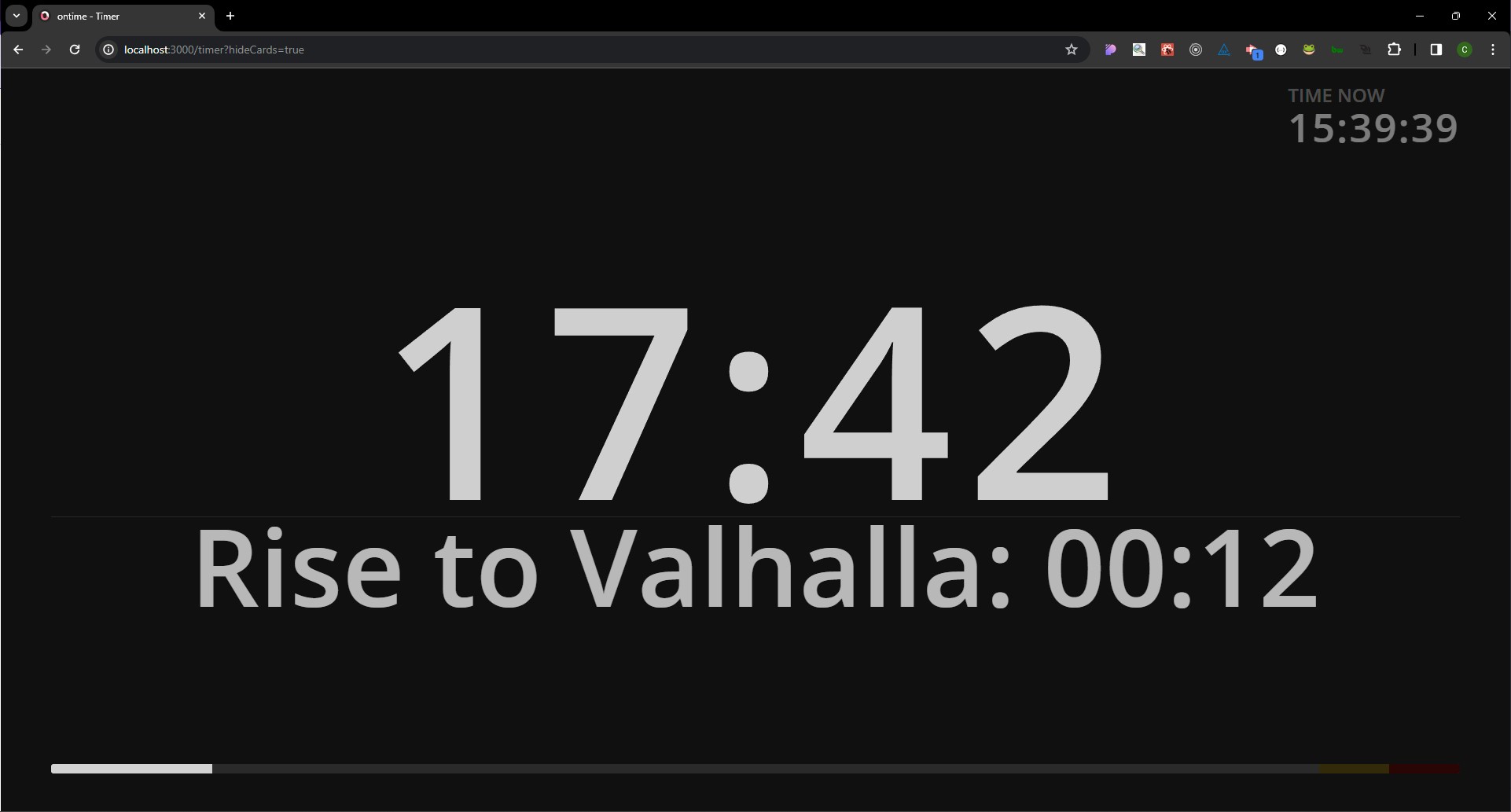
The external data is shown in the timer, and can be hidden in the view settings
You can inject data into the ontime presenter view. This is useful in cases where you would like another software to push some data to Ontime. ie: a running time from video playback in VLC
## Setting external data
You can set the external fields using both the OSC or WebSocket API, again the APIs are fully compatible
## OSC
| Message | Payload |
| ------------------------------------ | ------------- |
| /ontime/set-external-message-text | string |
| /ontime/set-external-message-visible | true \| false |
WebSocket
| Message | Payload |
| ---------------------------- | ------------- |
| set-external-message-text | string |
| set-external-message-visible | true \| false |